Vol. 03
04.04.2024 – 11.05.2024
Vol.3
Painting exhibition by Alexis Korbis
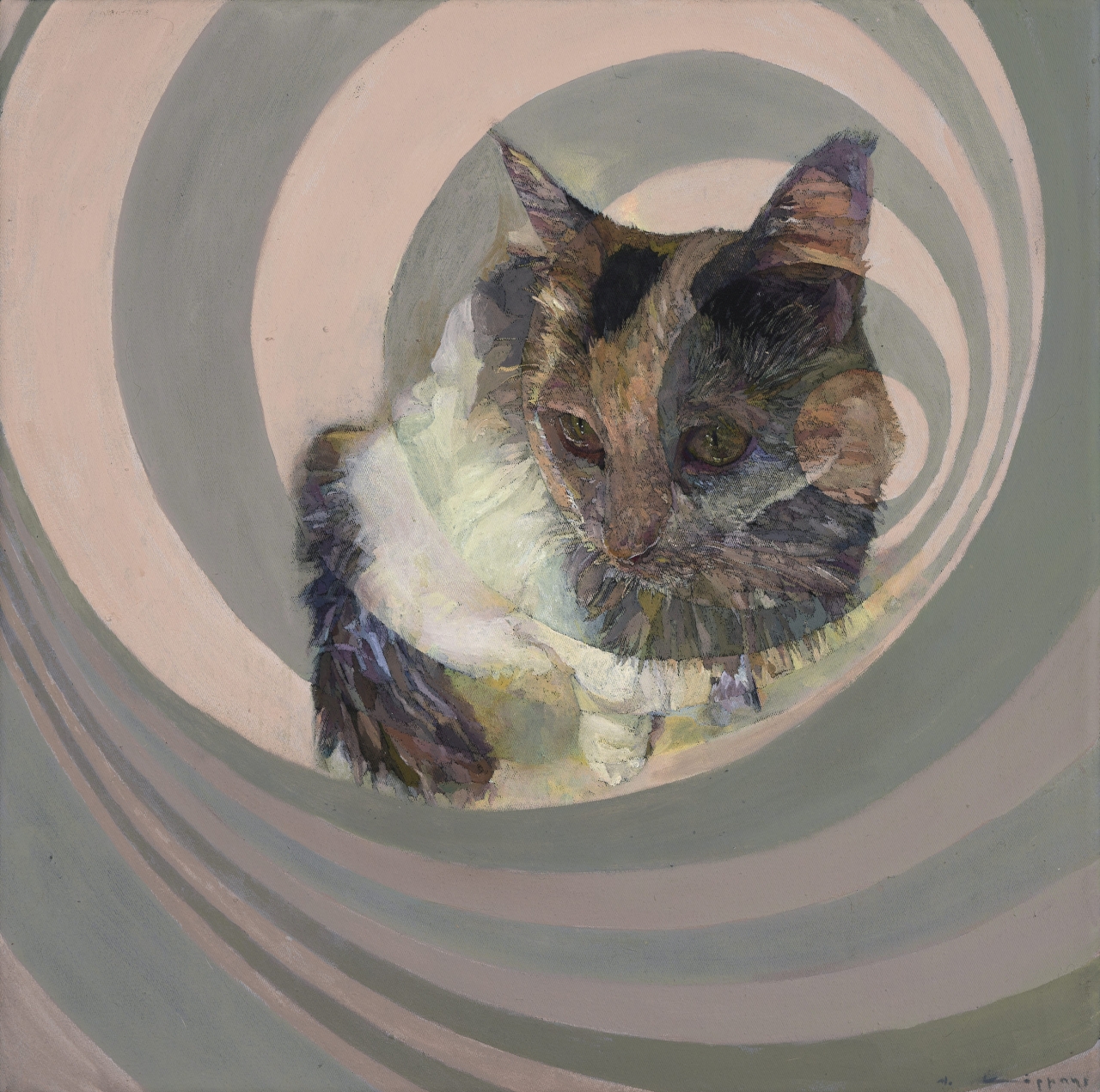
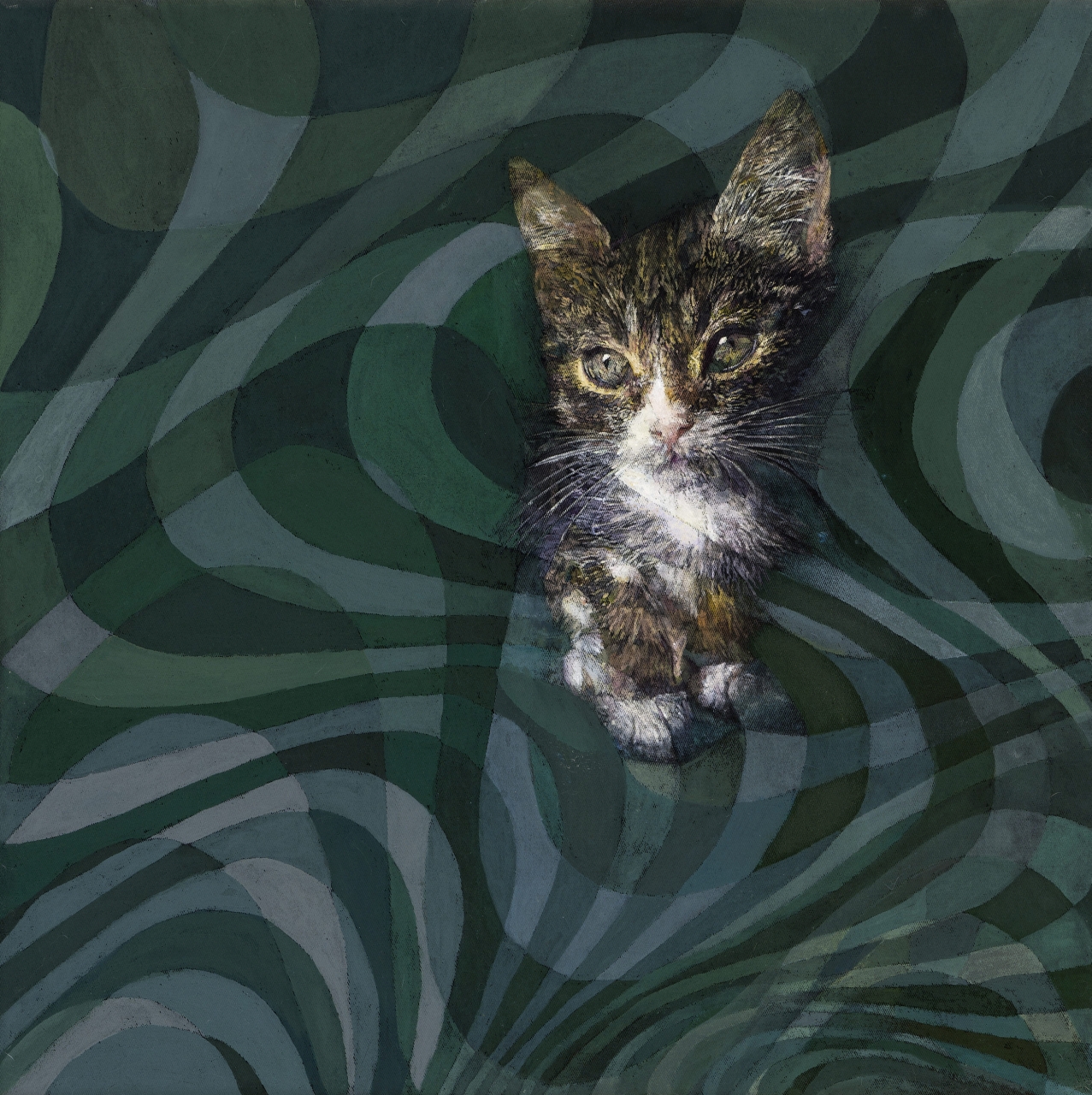
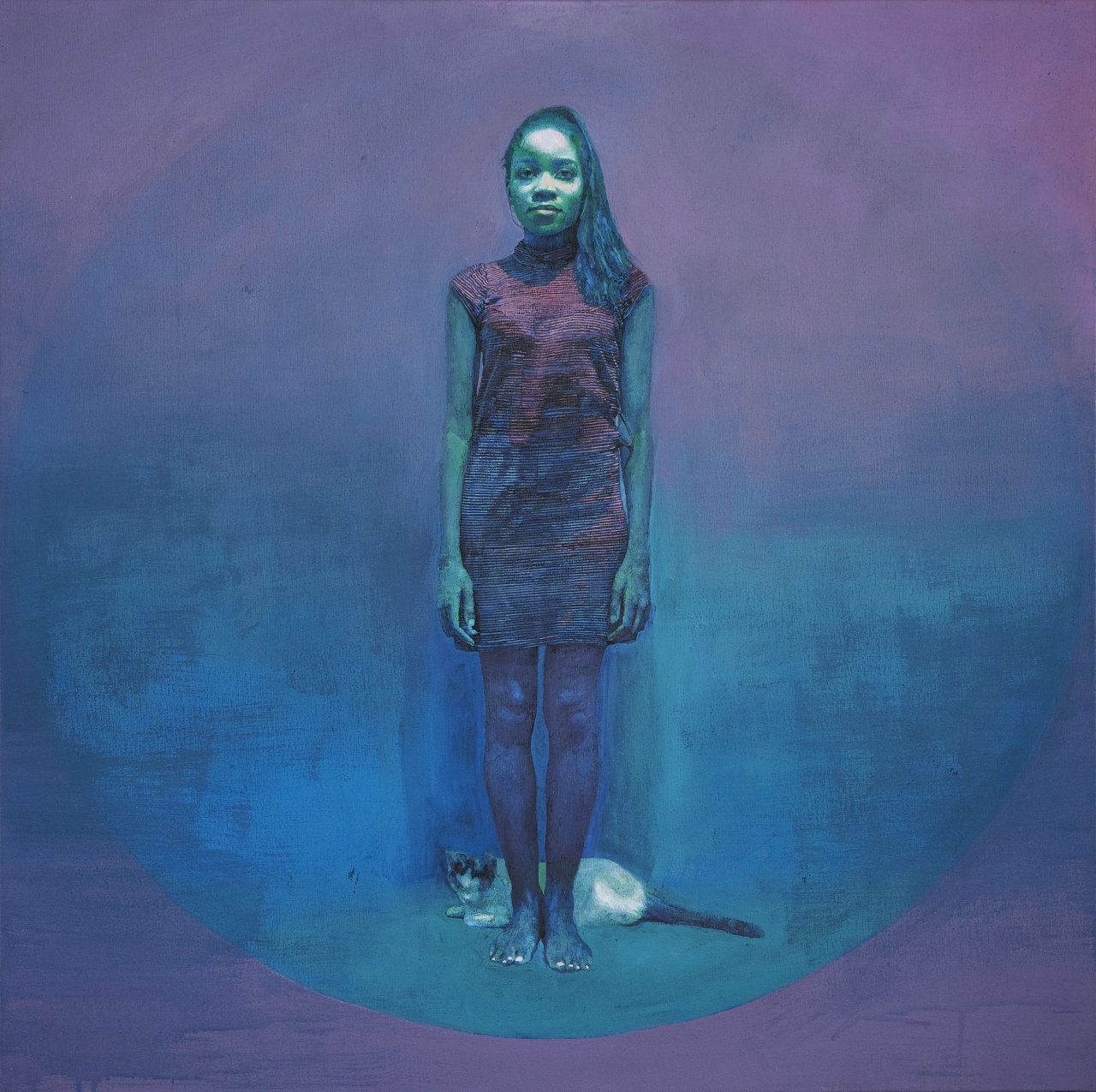
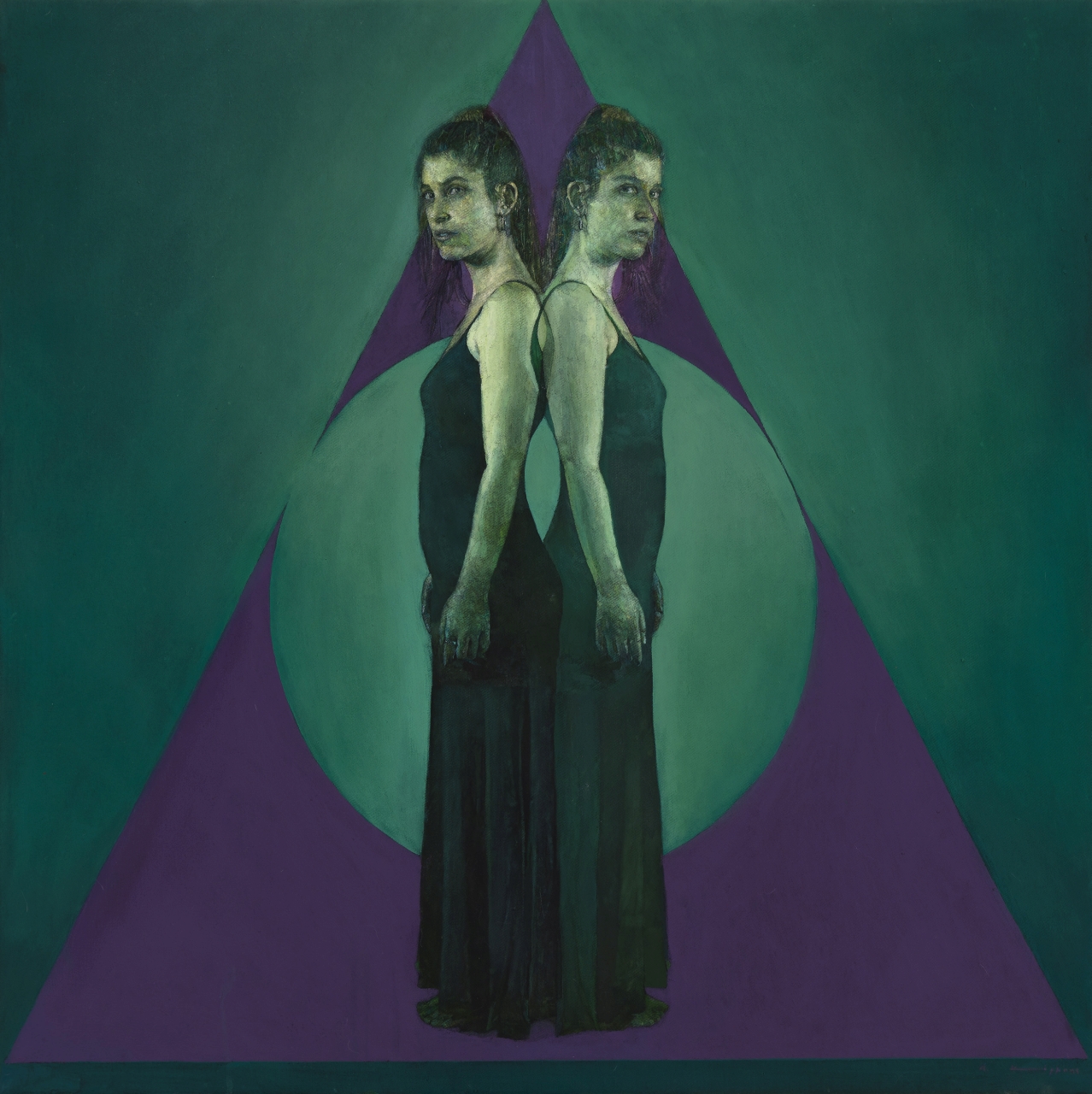
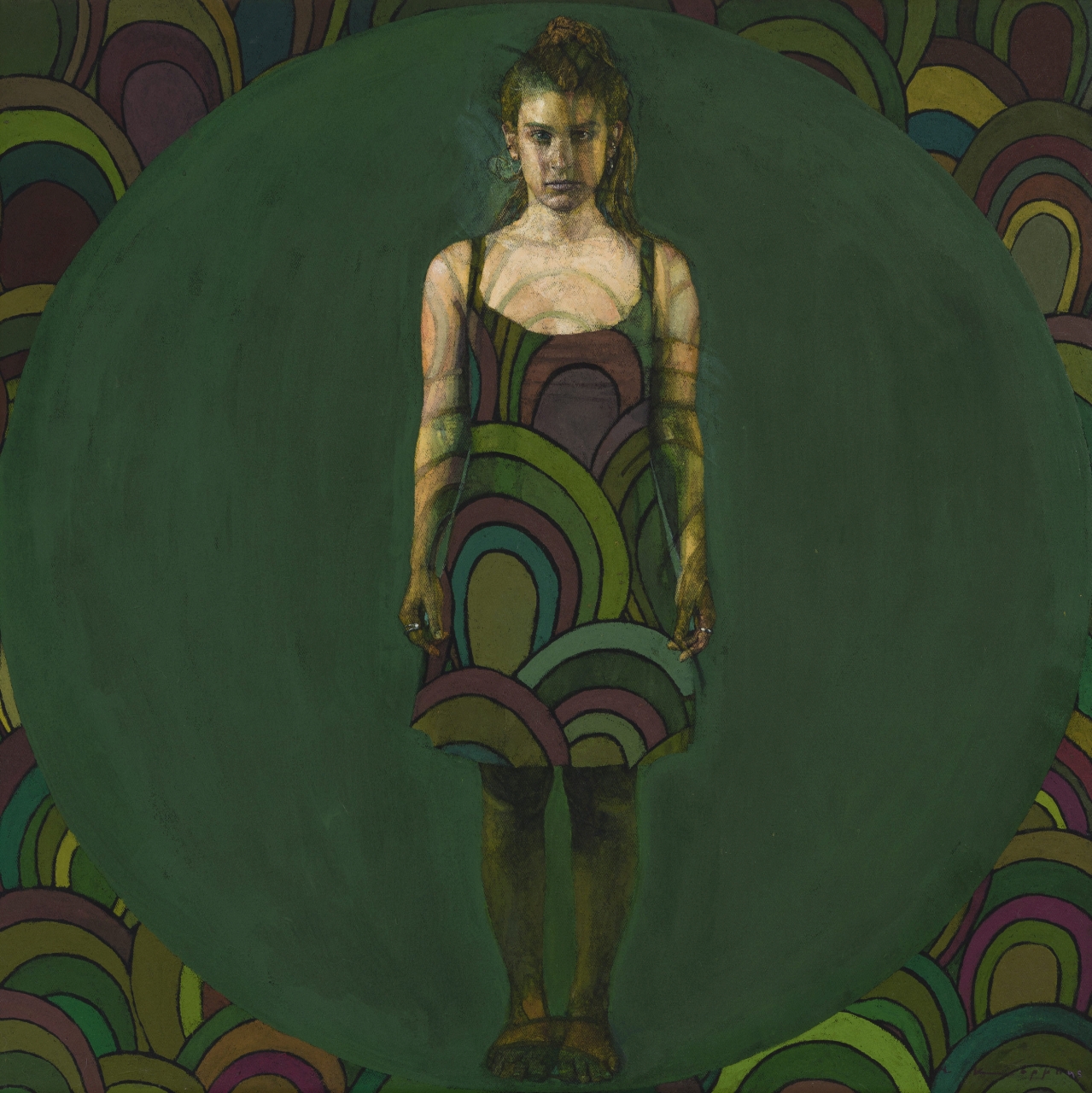
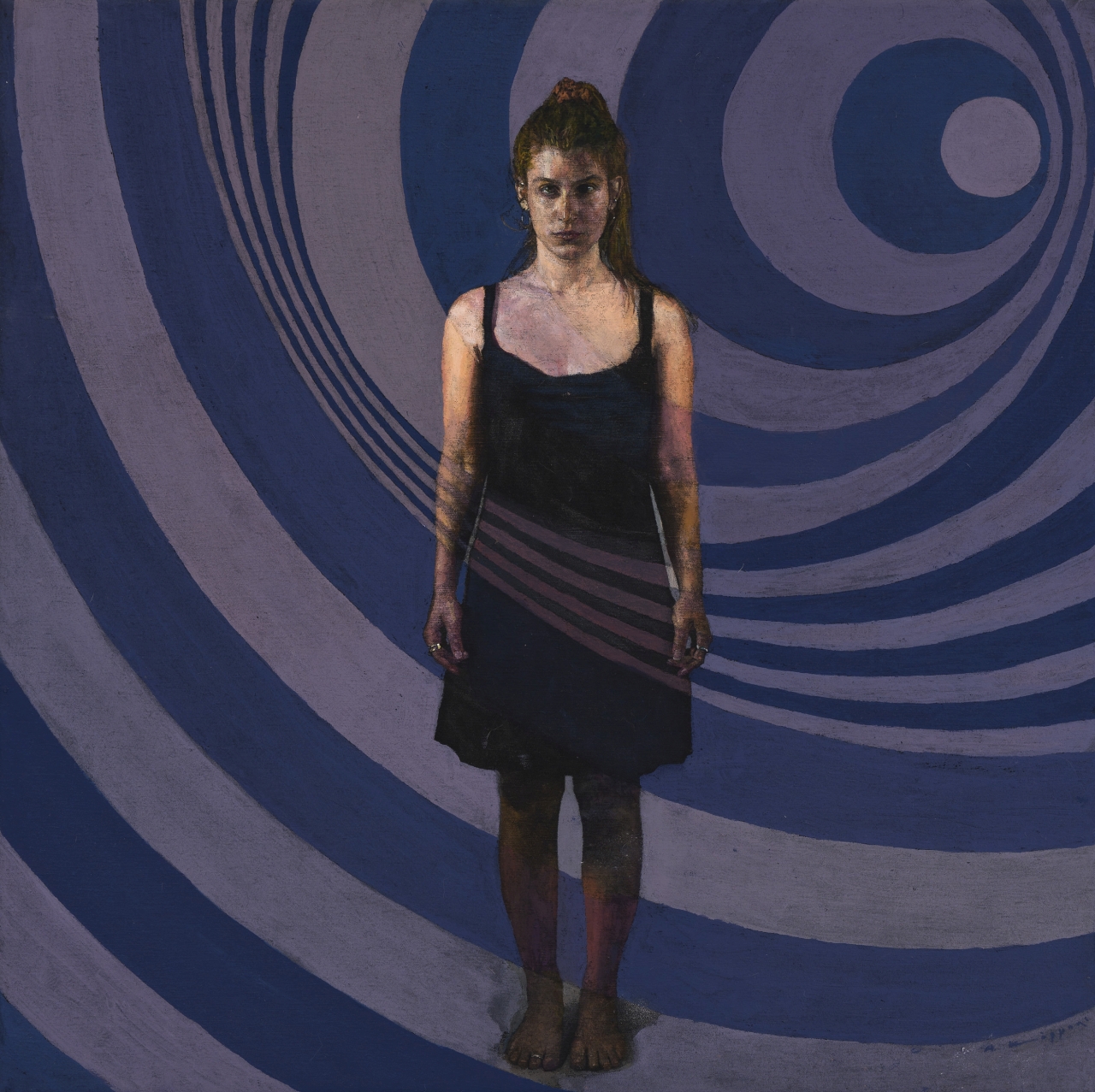
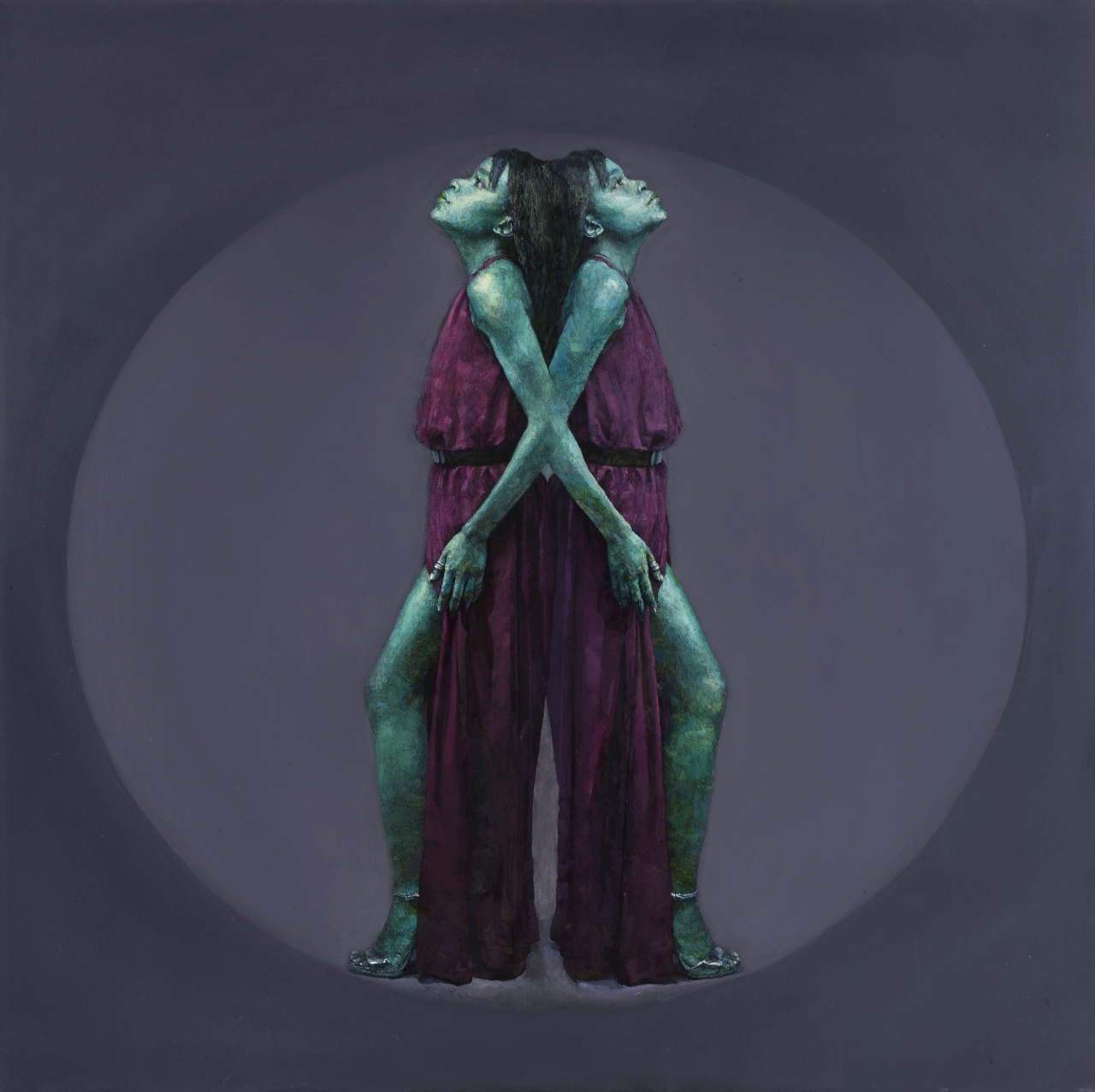
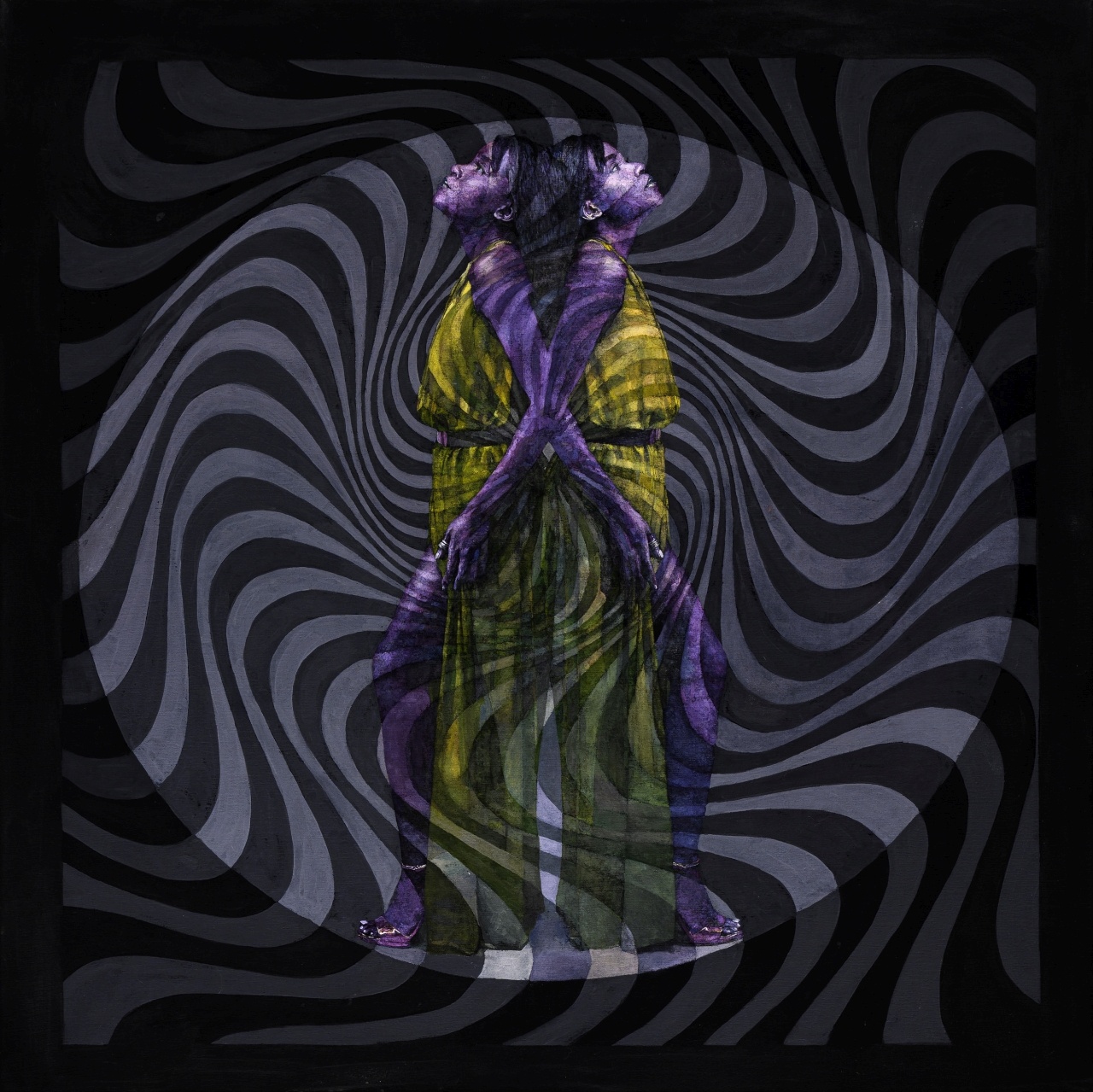
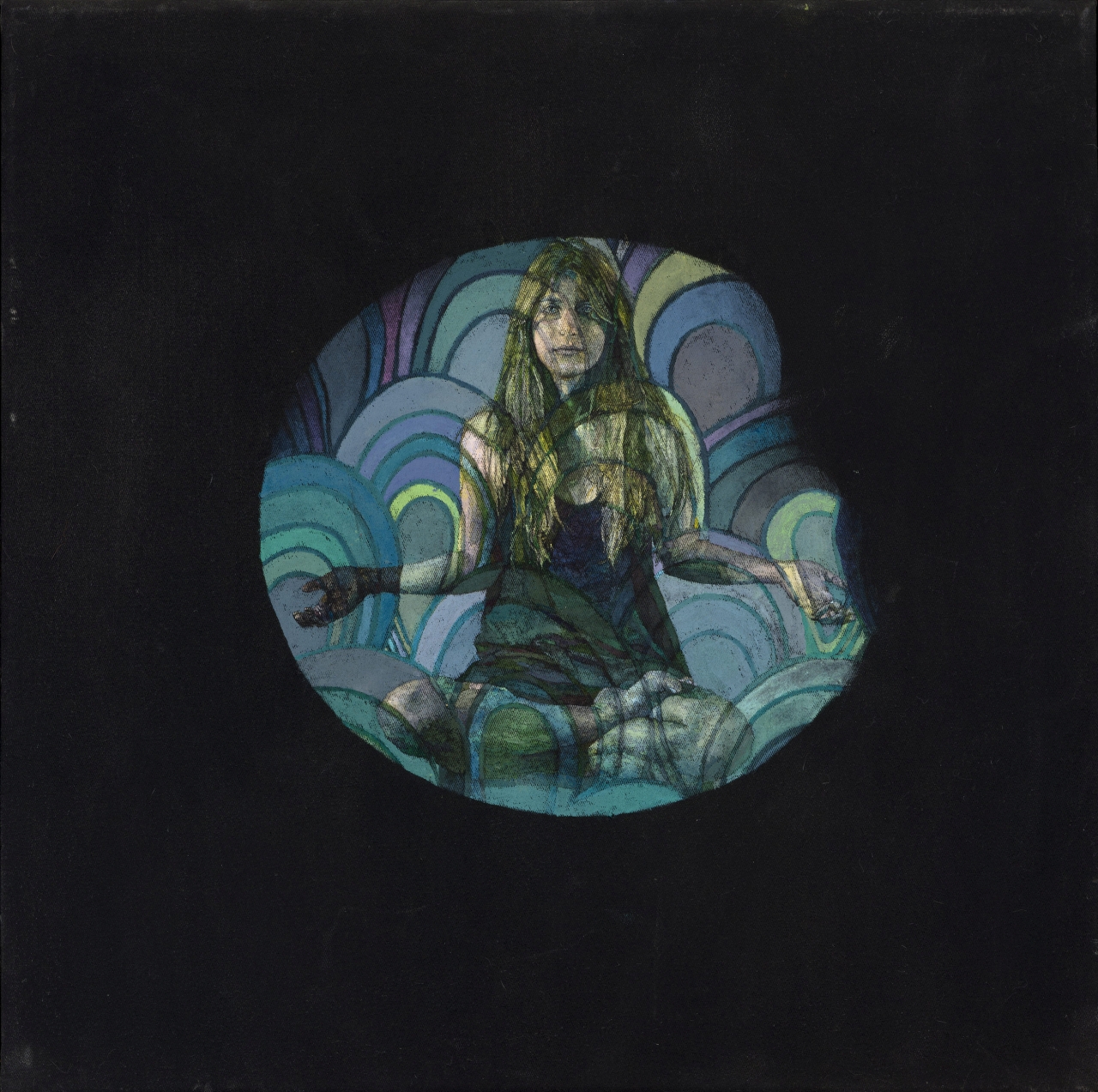
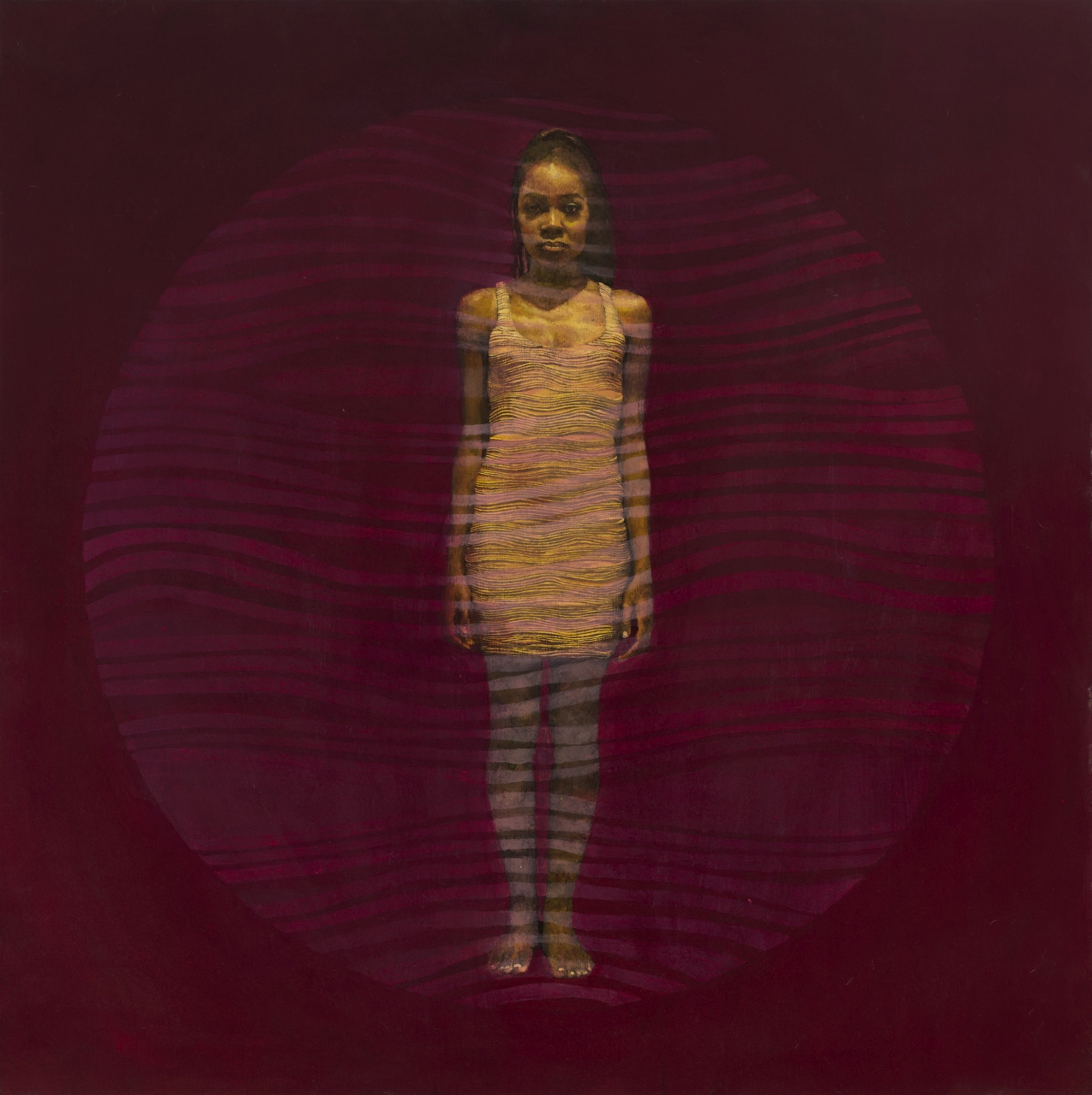
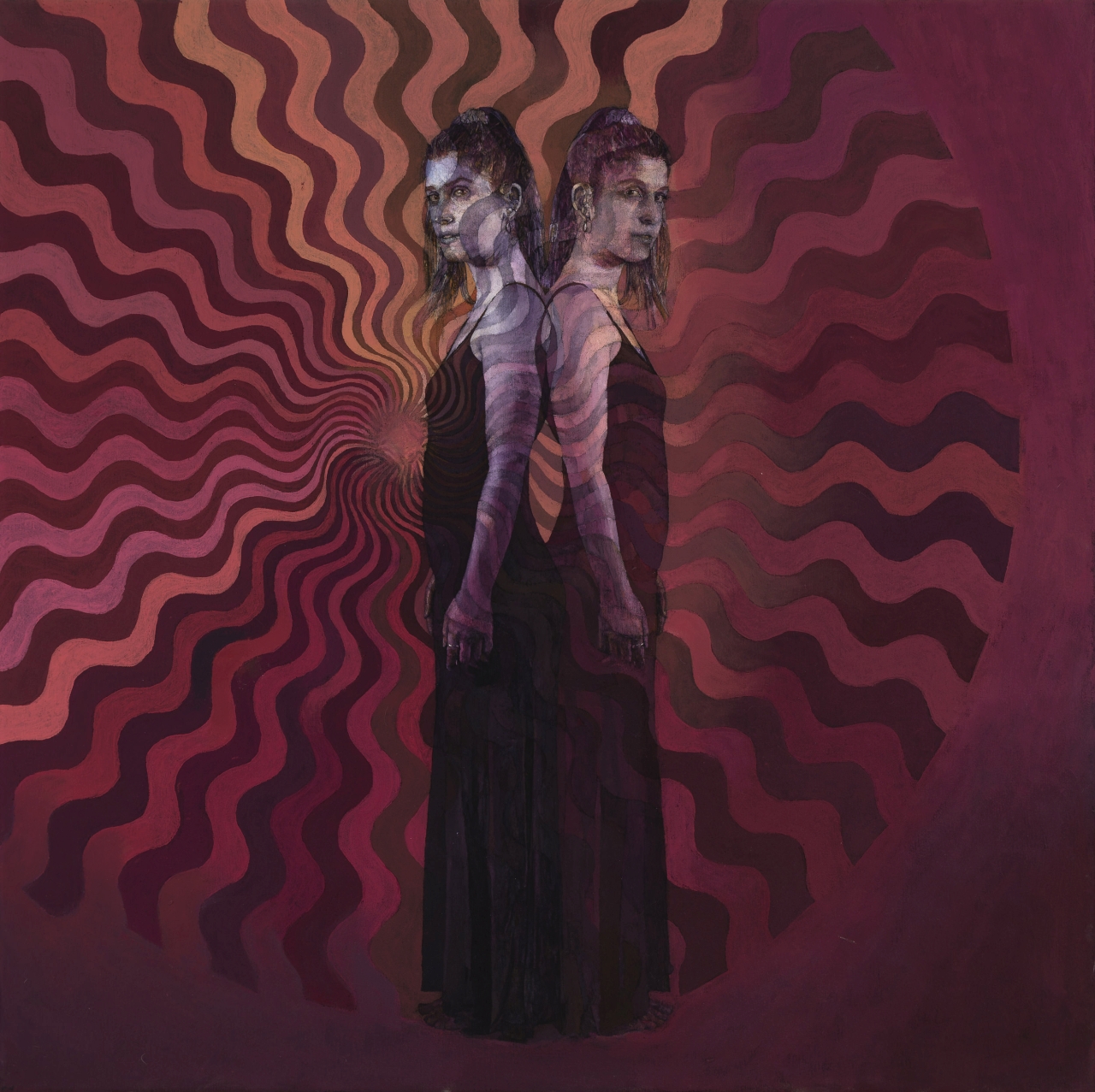
In the works presented in the Athens Art Gallery in 2018, Alexis Korbis introduced
the audience to the basis of his artistic orientation, synthesising realistic figures and
psychedelic patterns. In his new works, while following the same direction, he further
intermixes his patterns and forms, developing his unique style. His shapes, fey and
mysterious, get lost in maze patterns, drawing the spectators into their world.
Korbis’ paintings capture a special dynamic of connectedness by interlacing shapes with
forms, and creating a sense of unfamiliarity to the viewer. This dialectic of realism with
dream symbolism that can be found in his works continues to follow Carl Jung and his
research on the unconscious, the deepest part of the soul that remains inaccessible to
us. Thus, Korbis’ geometric shapes—mostly circles or triangles—trace their origins to
the mandala, the sacred shape of Hinduism. A focal point and a beacon for spiritual
guidance, the mandala has, according to Jung, the power to release the unconscious. To
these shapes, Korbis now adds spirals and waves, in the spirit of psychedelia (another way
of capturing the psyche, this time through ecstatic music). Consequently, at the level of
picture composition, the figures are often shown to be permeated with waves, to sink or
be tossed in spirals, while other times they stand still, surrounded by static or dynamic
circles, or other triangular shapes. The figures, always female, face the viewer and offer
entrance to their world. Among them are also cats, which either play an accompanying or a
leading part in the paintings. Once again, the motifs point to the transcendence of reality
and reach towards dreamscapes, in contrast to the realism of the figures. Hence, a sense
of unfamiliarity is born, as the shapes penetrate the forms, questioning and undermining
their coherence.
Το that end, Korbis does not incite us in the certainty of affirmation, but in the ambiguity
of exploration. The fluidity of his frames, and the interpenetration of his patterns and
forms, lure the audience in and comprise the challenge between the artist and the
audience.
Marilena Pateraki