Electric Mandala
25.01.2018 – 24.02.2018
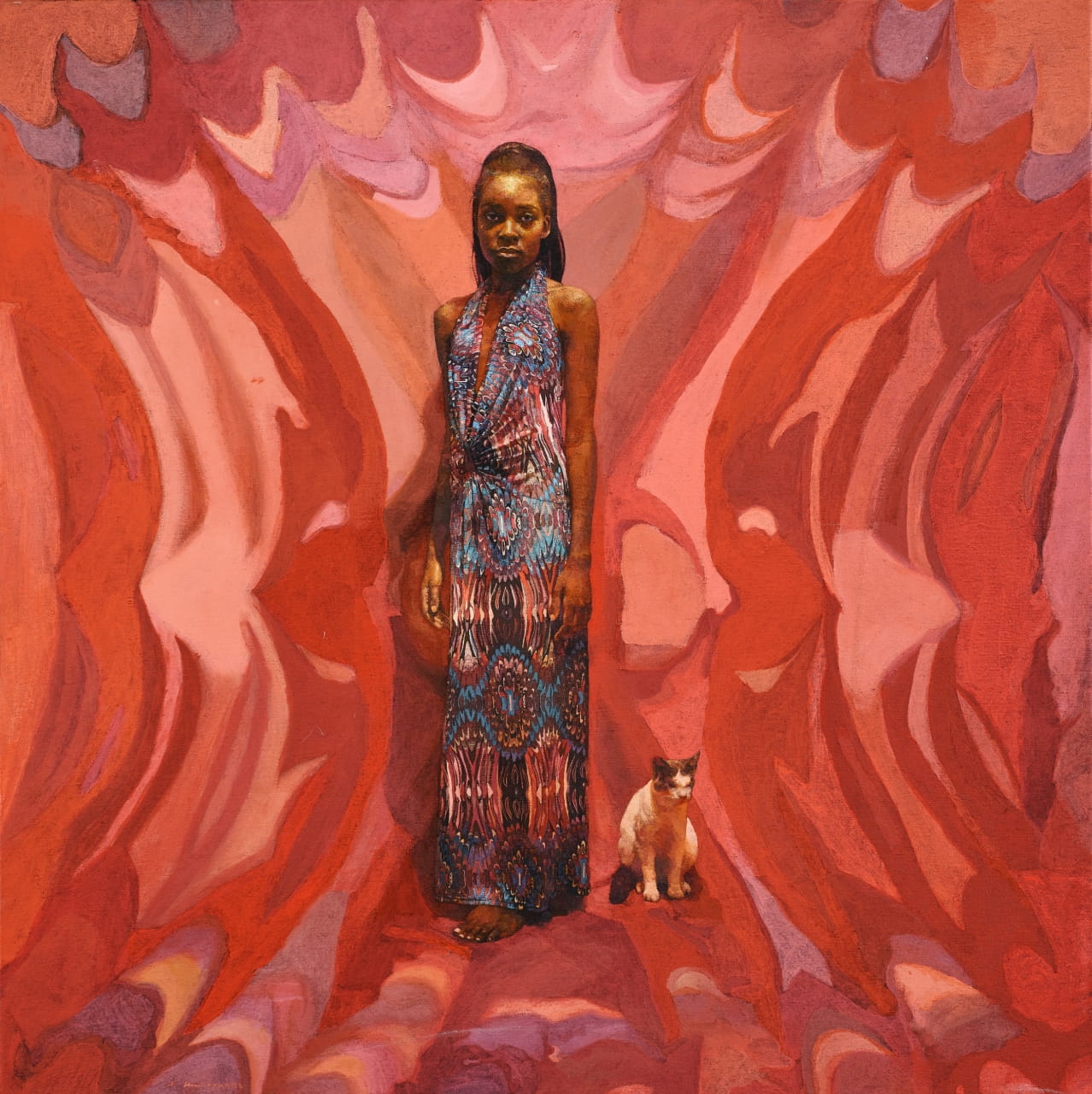
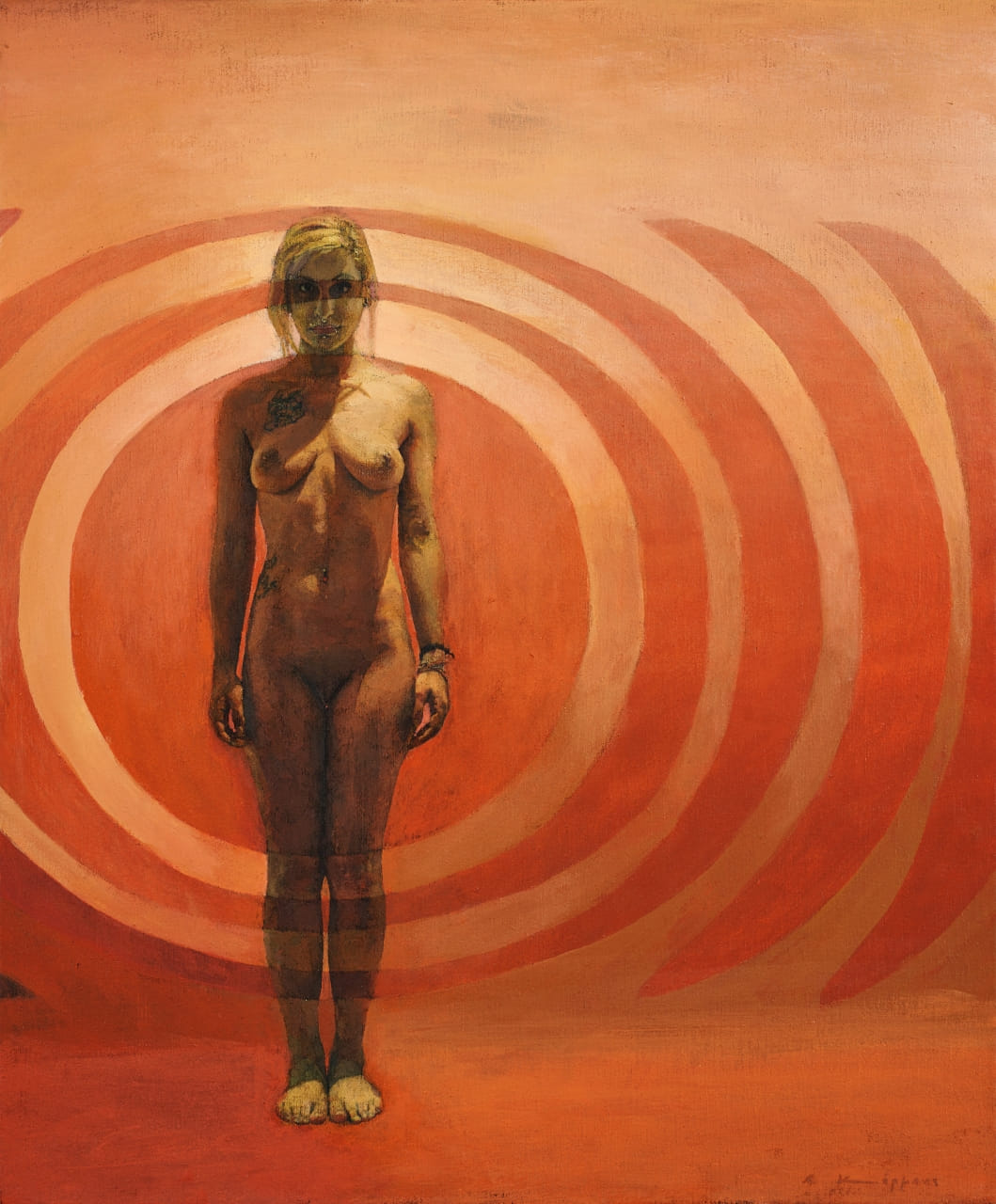
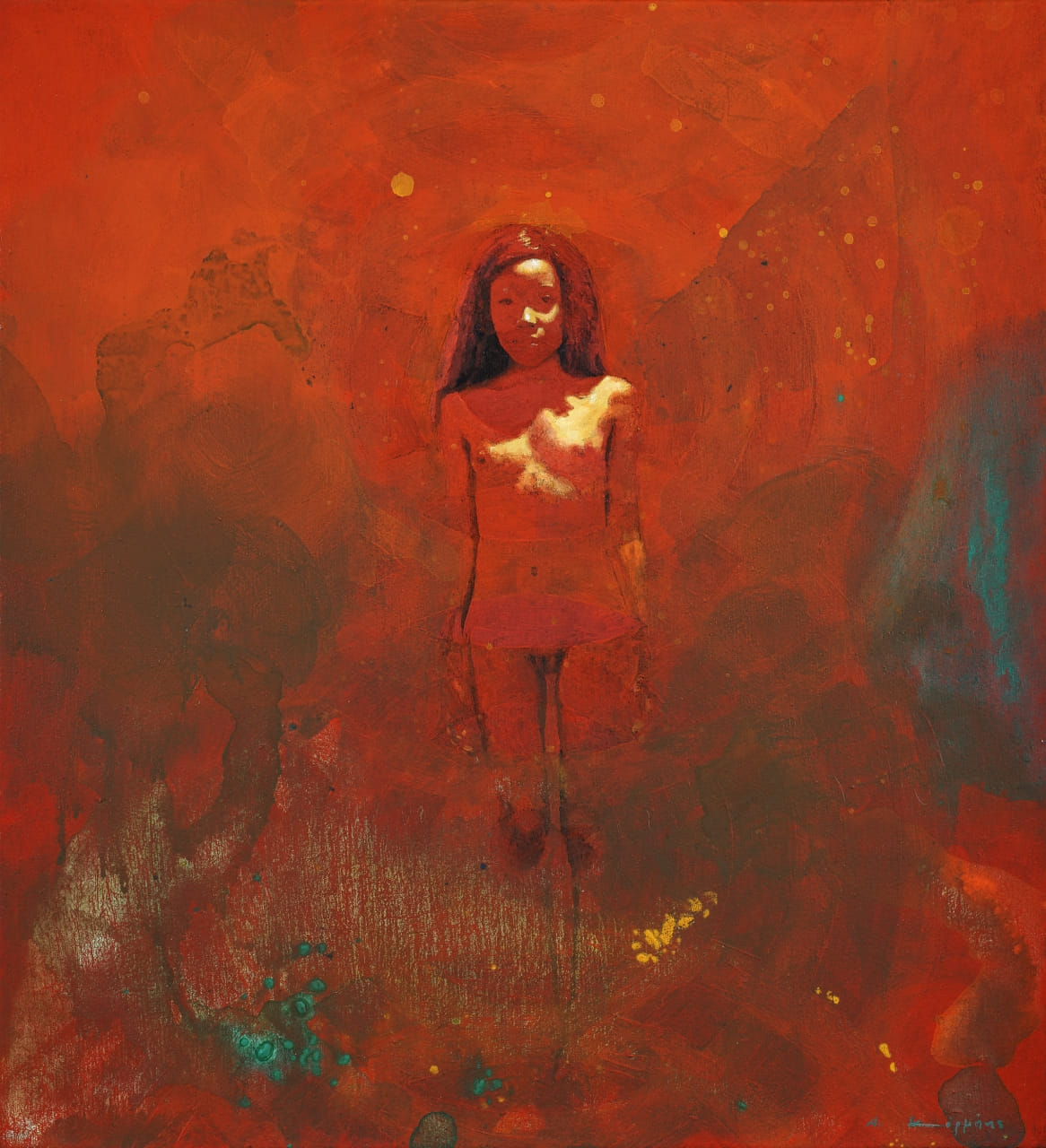
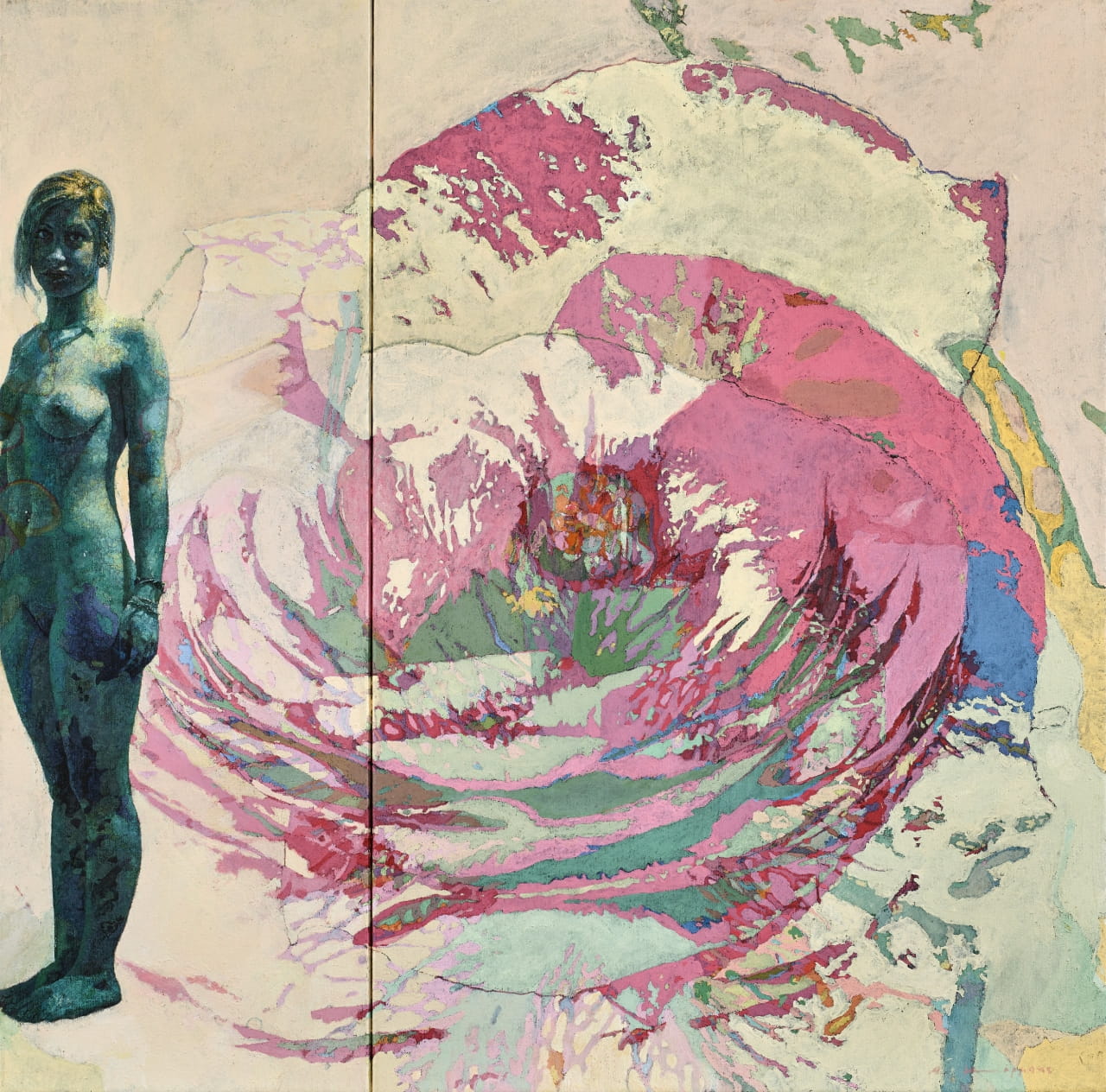
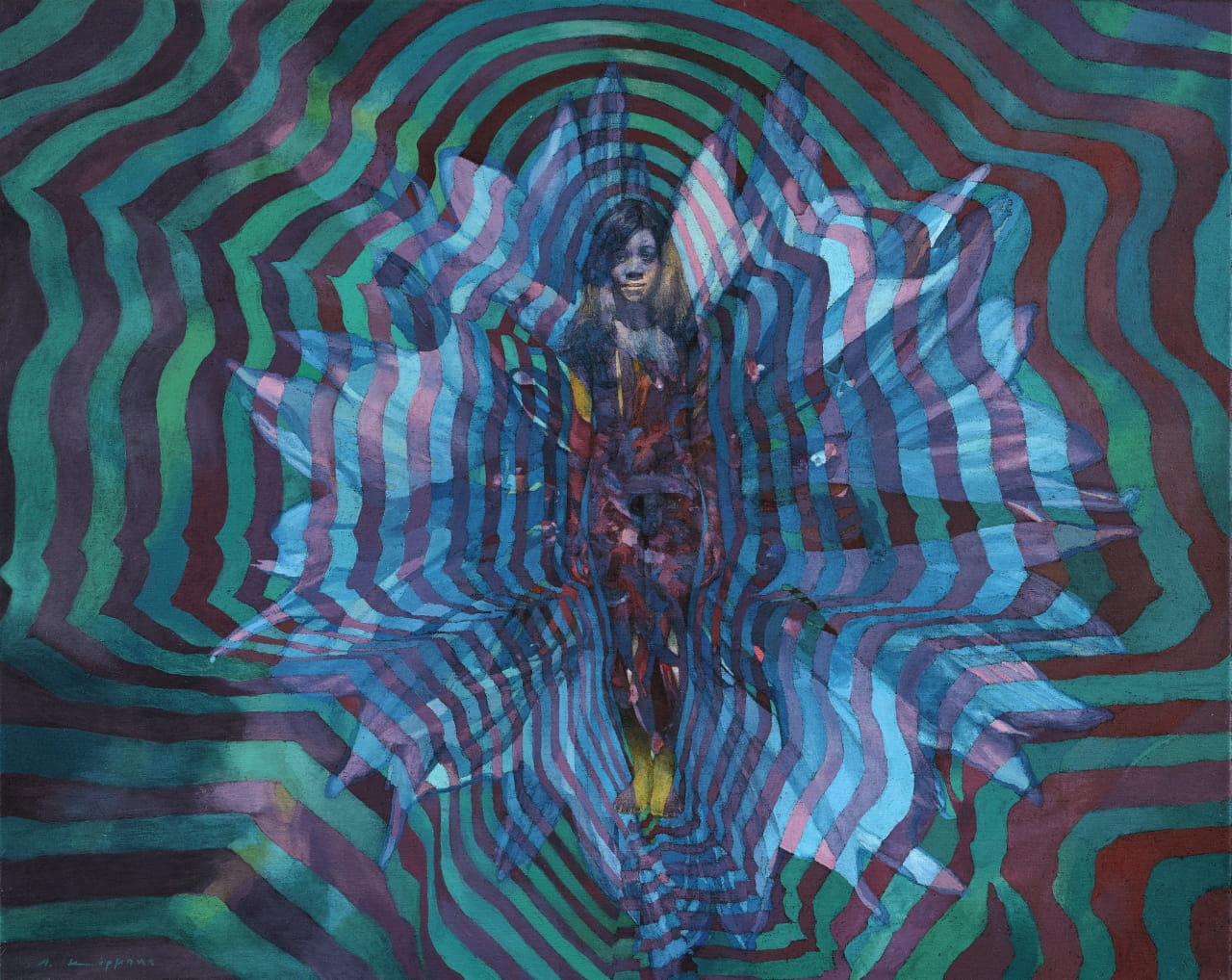
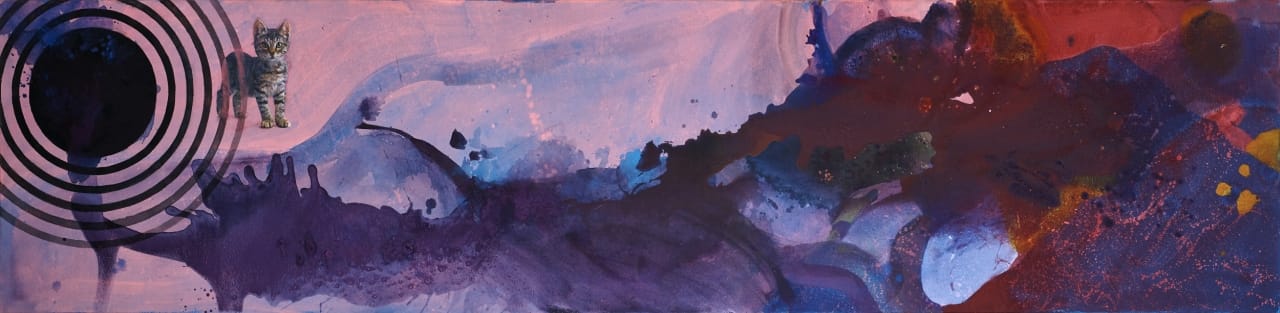
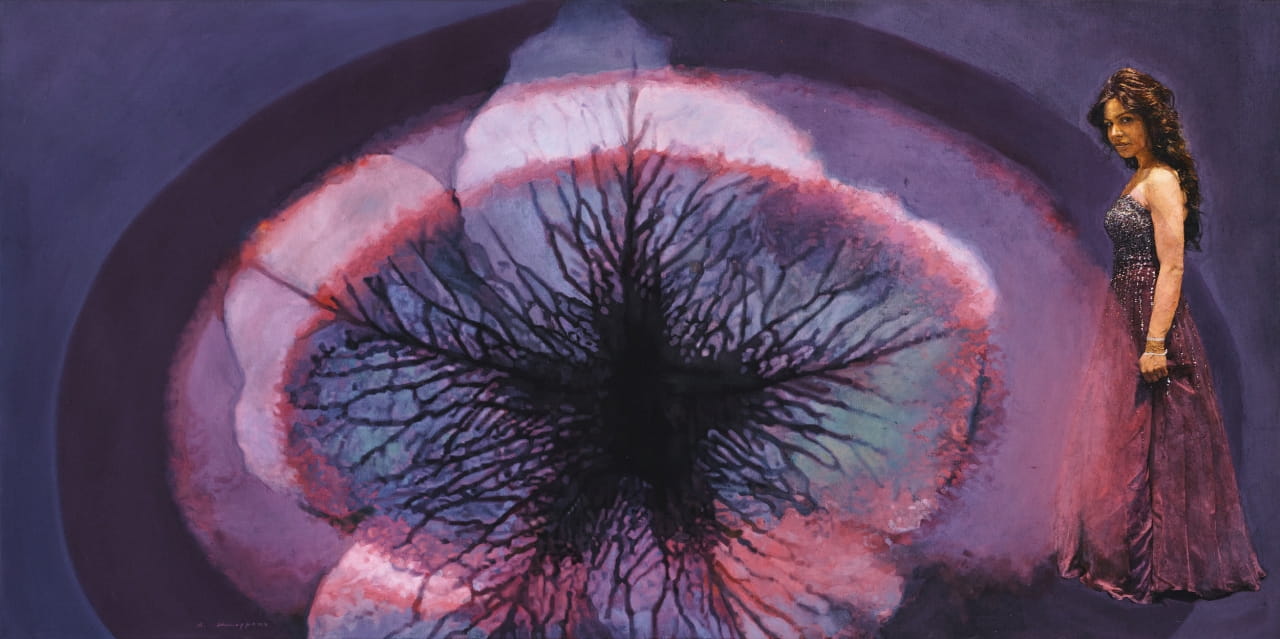
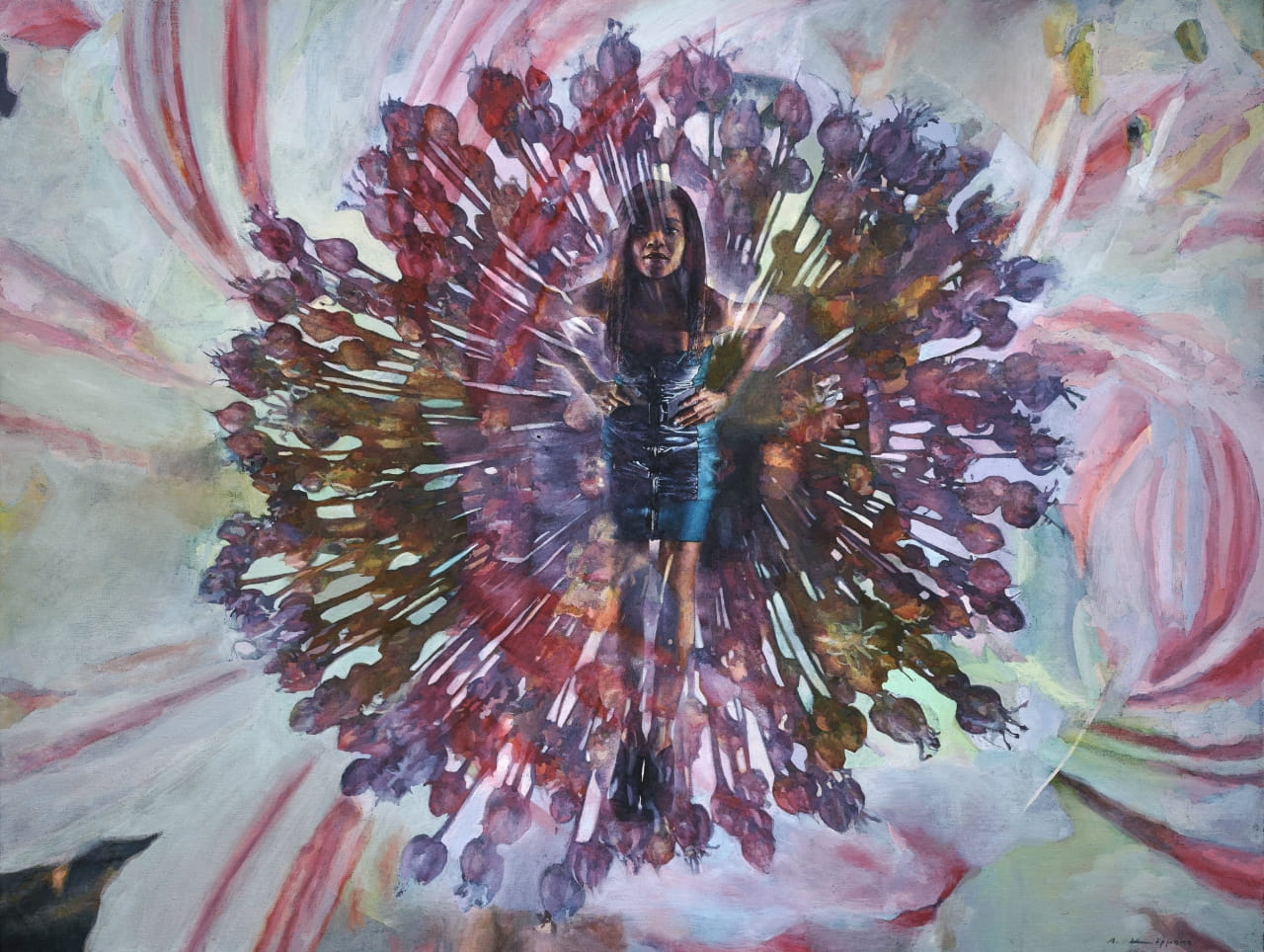
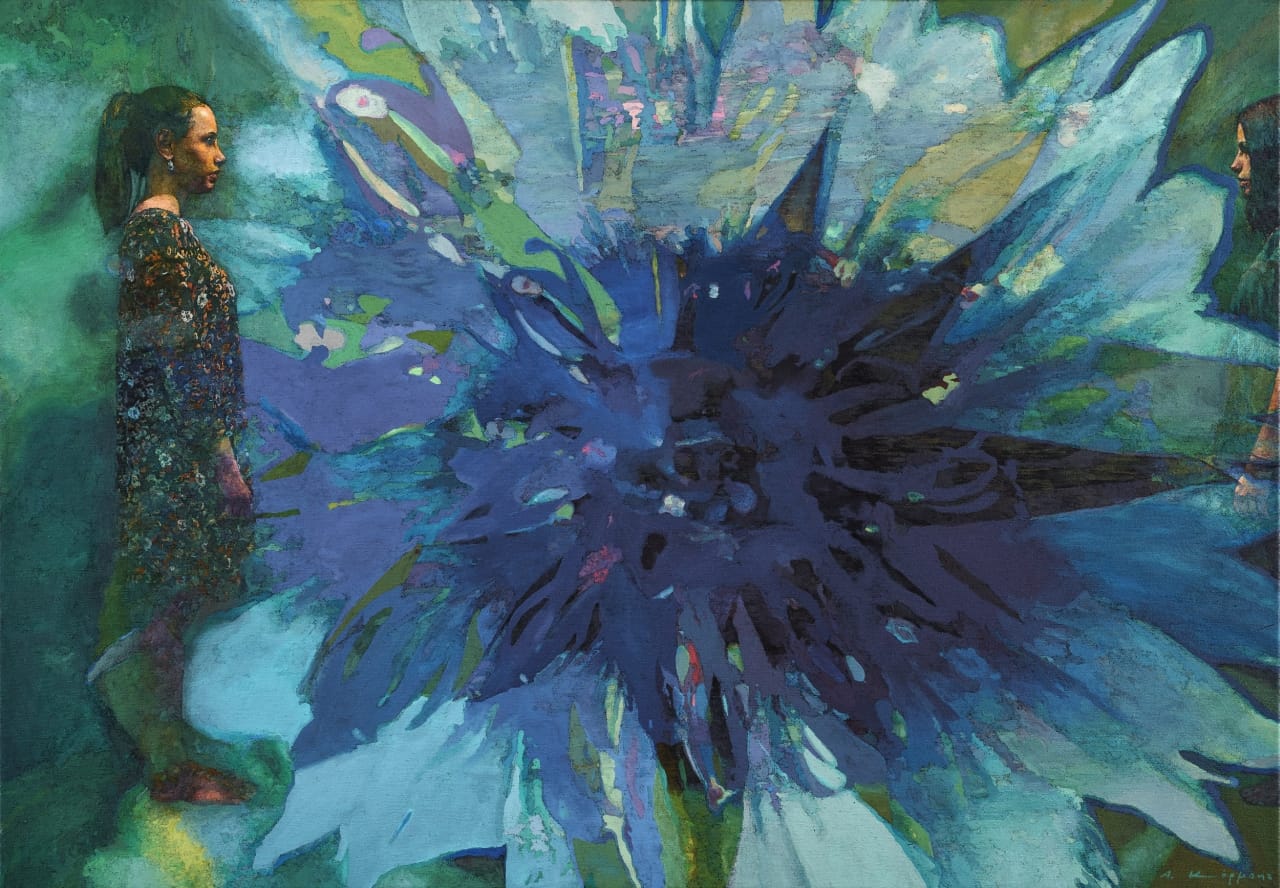
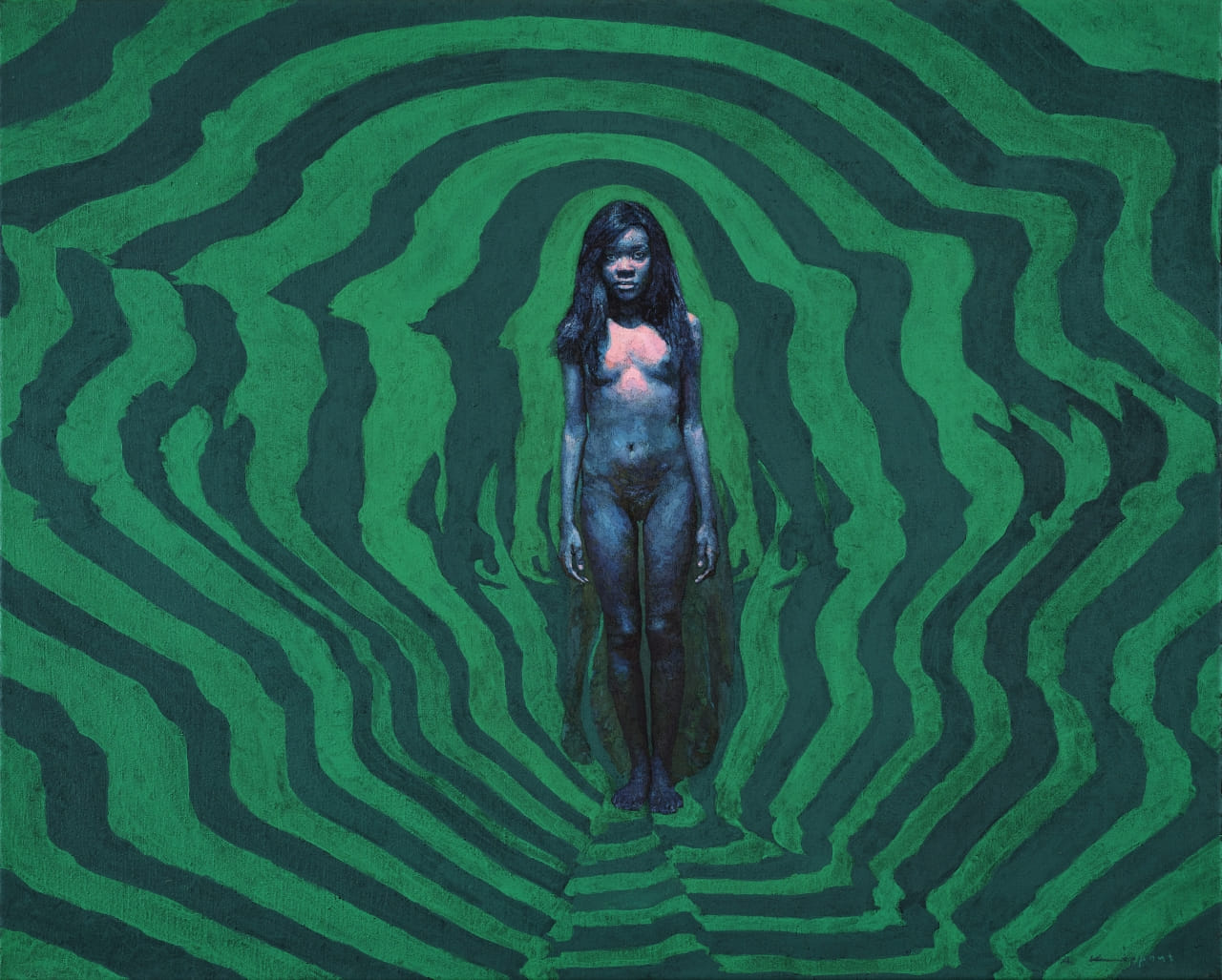
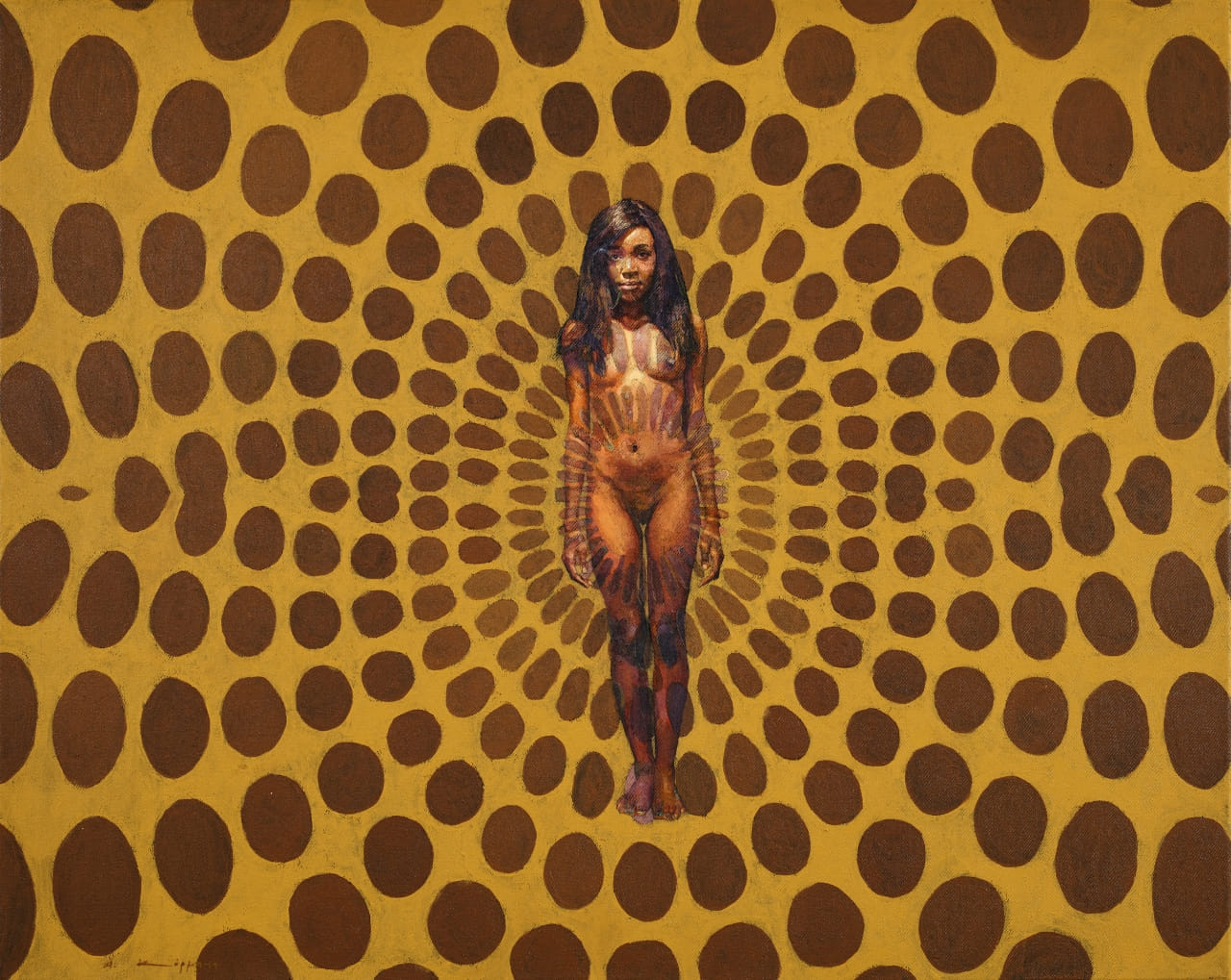
The work of Alexis Korbis’ constitutes an personal approach in the field of modern art, one that melds provocative, yet realistic depictions of human figures with warping, kaleidoscopic motifs of psychedelic art. His paintings capture a special dynamic of relationships; the forms chosen offer a “discourse” of an absolute world made of symbols, and a spacetime that is open to the viewers’ interpretation. The presence of the “mandala”, the spiritual and ritual symbols of Hinduism and Buddhism that can be seen enclosing or accompanying the human forms, is highly significant. The mandala represent not only a microcosm of the universe but also offer themselves as a lodestar on the road to enlightenment and the dynamic depiction of human psyche.
Through the blending of mandala symbols and human figures, the singular forms are pluralised, while the separation of interior and exterior space is neutralised, resulting in the shaping of an appropriate setting for the viewers, who will eventually be called on to complete the imagery through their own imagination. Herein, the time imprinted on the canvas is neither definite nor linear, but is contained within multiple timings, where colors and sounds are part of the spectator’s phenomenological experience. This very experience is precisely the reason why Korbis’ work is both contemporary and groundbreaking.
Korbis is thus conversing with the criticism of the modern subject, by negating the dualities that are deeply rooted in the Western culture. The figures’ multiple representations are developed through a particular aesthetic that is tied to psychedelic rock music, and also to Hindu-Tibetan mysticism and its Jungian interpretation. Therefore, the motifs manifest the transcendence of reality toward the dream, in opposition to the realism of the figures.The “discourse” between realism and the symbolism of the dream found in Korbis’ works –which consciously follows Jung’s interpretations– reaches the deepest levels of the soul, whose substance remains unknown to us. By pointing out the multiplicity of the one, the association with other levels of reality, and the synthesis of a macrocosm and microcosm within each individual form, that can either extend all over the place or reduce itself to its basic elements, all interpretations that emerge by looking at the paintings are acceptable. For Korbis, the question lies not in the certainty of the affirmation, but in the ambiguity of the inner-search, and that is what makes his work so interesting.
Marilena Pateraki, Art Historian